Iceland: Land of Fire, Ice, and Unforgettable Experiences


There are destinations that check boxes on a travel list, and then there are destinations that fundamentally shift how you see the world. Iceland is decidedly the latter.
This Nordic island nation, perched on the edge of the Arctic Circle, has emerged as one of the world's most sought-after luxury travel destinations—and for good reason. Iceland isn't simply a place to visit; it's a place to be transformed. Whether you're watching the midnight sun paint the sky in shades of gold and amber, tasting the briny sweetness of Arctic char pulled from pristine waters that morning, sinking a putt on a course carved into volcanic terrain, or standing hand-in-hand with your beloved beneath a ribbon of emerald northern lights, Iceland offers the kind of profound, sensory-rich experiences that linger long after you've returned home.
For discerning travelers seeking authenticity, adventure, and the kind of luxury that comes from intimate access rather than grand scale, Iceland represents something increasingly rare: a destination where exclusivity and genuine connection still feel possible.
Explore Iceland by Small Ship: The Intimate Way to Discover a Wild Coast
Imagine navigating Iceland's intricate fjords, remote glaciers, and hidden coves aboard a vessel so intimate that you can see the expression on your fellow travelers' faces across the dining room. This is the magic of small ship cruising in Iceland.

Companies like Atlas Ocean Voyages and Windstar Cruises have perfected the art of Icelandic exploration through vessels that carry between 100 and 300 passengers—small enough to access ports and anchorages that larger cruise ships simply cannot reach, yet substantial enough to offer the comfort and culinary excellence luxury travelers expect.
A small ship journey through Iceland typically weaves through the country's dramatic coastline, offering itineraries that might include the striking fjords of the East, the bird-rich cliffs of the North, the glacier-fed waters of the West, and the golden beaches of the South. You'll wake up in different locations throughout your voyage, each one more spectacular than the last: perhaps a morning in a remote fjord where waterfalls cascade directly into the sea, or an afternoon anchored near a tidewater glacier calving massive icebergs into crystalline waters.
What sets small ship cruising apart is flexibility and access. These vessels can navigate shallow waters and dock at smaller ports, allowing you to visit charming fishing villages, remote research stations, and natural wonders that feel genuinely undiscovered. Zodiac excursions take you even closer to Iceland's most pristine corners—gliding past basalt columns, approaching breeding colonies of puffins and arctic terns, or navigating between icebergs in Jökulsárlón Glacier Lagoon.
The onboard experience rivals any luxury hotel. Expect farm-to-table dining featuring Icelandic ingredients, expert naturalists and historians who provide context and depth to every landscape you encounter, and a pace of travel that allows for genuine immersion rather than rushed sightseeing. These voyages attract seasoned travelers who value substance over spectacle, and the result is a convivial atmosphere where meaningful connections flourish.
Culinary Adventures in Iceland: Where Tradition Meets Innovation
Iceland's food scene has undergone a quiet revolution. Once dismissed as sparse and utilitarian, Icelandic cuisine has emerged as one of the Nordic region's most exciting culinary destinations—a place where world-class chefs honor centuries-old traditions while embracing contemporary techniques and global influences.

The foundation of Icelandic cooking is elemental: pristine seafood, heritage livestock raised on volcanic soil, foraged ingredients that thrive in the harsh climate, and dairy products of remarkable quality. Arctic char, caught in Iceland's glacial rivers, offers a delicate, buttery flavor that's become iconic. Langoustine, scallops, and wild cod are prepared with minimalist elegance that lets their natural sweetness shine. Lamb, traditionally slow-roasted or smoked using age-old methods, carries a distinctive flavor profile shaped by the plants these animals graze on.
But what makes Icelandic cuisine truly compelling is how contemporary chefs are reimagining these ingredients. Reykjavik's restaurant scene—concentrated in a compact historic center—rivals that of much larger European capitals. Restaurants like Dill and Matur og Drykkur blend ancestral recipes with modern plating and technique, creating dishes that feel both deeply rooted and entirely innovative. Farm-to-table dining experiences take you directly to the source, where you might enjoy a multi-course meal in a restored farmhouse, prepared by chefs who source ingredients from the surrounding land.
Small ship cruises amplify this culinary immersion. Onboard chefs source from Icelandic ports, meaning your dinner might feature langoustine caught that very morning or vegetables from a geothermal farm visited earlier in the day. Culinary-focused shore excursions might include visits to local markets, cheese-making facilities, or intimate dinners in remote fishing villages. Some voyages partner with renowned chefs who conduct tastings and cooking demonstrations, sharing insights into Iceland's food culture.
Wine pairings deserve special mention. While Iceland doesn't produce wine commercially, the country's restaurants showcase exceptional selections from Europe and beyond. Icelandic craft breweries have also flourished, offering distinctive beers that pair beautifully with local seafood and lamb. For wine-focused travelers, small ship itineraries often include wine tastings and sommelier-led pairings that elevate the culinary experience.
Golf in the Land of Midnight Sun: A Golfer's Dream
For golf enthusiasts, Iceland presents a uniquely compelling proposition: championship-quality courses set against some of the world's most dramatic landscapes, all playable under the ethereal light of the midnight sun.

Iceland has invested significantly in golf infrastructure over the past two decades, and the results are courses that rival anything in Scotland or Ireland—but with a distinctly Icelandic character. Courses like Keilir Golf Club, situated on a peninsula with views across Faxaflói Bay, and Akranes Golf Club, nestled against volcanic mountains, combine championship-level design with settings that feel almost dreamlike. The fairways roll across lava fields, past geothermal steam vents, and beneath skies that seem impossibly wide.
The midnight sun phenomenon transforms the golfing experience. From late May through early July, Iceland experiences nearly continuous daylight—you can tee off at 10 p.m. and finish your round under a sky still glowing with twilight. This extended daylight allows for leisurely rounds, unhurried exploration of the course, and photography opportunities that capture golf against backdrops most courses can only dream of.
Even non-golfers find themselves enchanted by Iceland's courses. The landscapes are simply stunning, and many courses welcome walkers or offer observation areas where non-playing companions can enjoy the scenery and perhaps grab lunch at a clubhouse restaurant.
Romance Under the Northern Lights: Iceland for Couples
Iceland has become synonymous with romance—and deservedly so. There's something about a landscape this raw and beautiful, combined with the intimacy of small ship travel and the magic of natural phenomena, that naturally kindles connection between couples.
The northern lights, or aurora borealis, remain Iceland's most iconic romantic element. From September through March, clear nights offer opportunities to witness this celestial dance—curtains of green, violet, and occasionally red light flowing across the Arctic sky. There's no adequate way to describe the experience of watching the aurora with someone you love; it's primal, humbling, and profoundly moving. Small ship cruises position you in optimal locations for aurora viewing, and many vessels offer heated observation decks where you can watch the sky in comfort.

But Iceland's romance extends far beyond the lights. The landscape itself—dramatic cliffs, hidden waterfalls, black sand beaches, and geothermal hot springs—creates a sense of discovery and intimacy. Couples often find themselves in moments of genuine awe: soaking in the milky-blue waters of the Blue Lagoon, hiking to a remote waterfall, or simply standing together on a beach watching waves crash against ancient basalt columns.
Small ship voyages cater beautifully to couples. The intimate scale fosters connections with fellow travelers, yet the ship also provides privacy and the freedom to explore independently. Many cruises offer special amenities for honeymooners or anniversary celebrations—perhaps a champagne breakfast in your cabin, a couples' massage in the ship's spa, or a private dinner on deck under the midnight sun.
The pacing of small ship travel also allows for romance. There's no rushing from one port to the next; instead, you have time to linger, to experience moments fully, to simply be present with your travel companion. This quality of time—increasingly rare in our rushed world—is perhaps the greatest gift Iceland offers to couples.
Fun Facts About Iceland: Spark Your Curiosity
Iceland is a land of superlatives and surprises. Here are some fascinating facts that illuminate what makes this island nation so extraordinary:
A Young Country, Geologically Speaking —
Iceland sits atop the Mid-Atlantic Ridge, where the North American and Eurasian tectonic plates meet. The country is literally being pulled apart at a rate of about 2 centimeters per year, and new land is continuously being created through volcanic activity. Iceland is one of the youngest landmasses on Earth, with much of its current terrain less than 10,000 years old.
More Waterfalls Than You Can Count —
Iceland's dramatic topography and abundant precipitation create countless waterfalls. Skógafoss, Seljalandsfoss, and Gullfoss are among the most famous, but smaller cascades appear around virtually every corner. The country's interior is so waterfall-rich that locals joke you can't throw a stone without hitting one.
A Nation of Readers —
Iceland has the highest literacy rate in the world and publishes more books per capita than any other country. The tradition of reading during the dark winter months is so culturally embedded that "jólabókaflóð" (Christmas book flood) is a beloved national tradition where families exchange books on Christmas Eve and spend the evening reading.
No McDonald's, No Chain Hotels —
Iceland has fiercely protected its culture and landscape from corporate homogenization. You won't find international fast-food chains or large hotel conglomerates dominating the tourism landscape. Instead, you'll encounter family-run guesthouses, locally-owned restaurants, and businesses deeply rooted in Icelandic communities.
Puffins, Vikings, and Sagas —
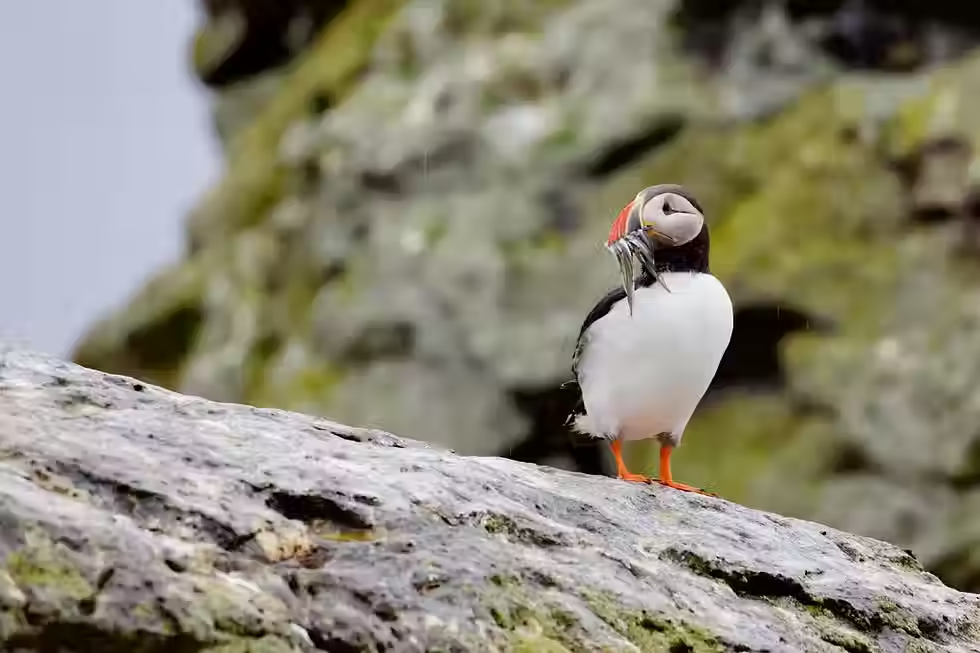
Iceland's wildlife includes species found nowhere else on Earth. The Atlantic puffin, with its distinctive orange beak and endearing demeanor, is an icon of the Icelandic coast. Meanwhile, Iceland's literary heritage—the Norse sagas written down in the 13th century—remains some of the world's greatest literature and continues to shape how Icelanders understand themselves.
No Snakes, No Mosquitoes —
Iceland's harsh climate means the country is free of snakes and, mercifully, mosquitoes. This makes summer hiking and outdoor exploration remarkably pleasant compared to many northern destinations.
Plan Your Icelandic Journey: Practical Wisdom for the Discerning Traveler
Best Times to Visit
Iceland offers distinct experiences depending on season. Summer (June-August) offers the midnight sun, accessible interior highlands, and optimal conditions for hiking and small ship cruising. Winter (November-February) provides the best aurora viewing, dramatic weather, and a sense of genuine remoteness. Shoulder seasons (May and September) offer a balance: decent weather, fewer crowds, and still-excellent opportunities for northern lights viewing in September.
Duration and Pacing
A meaningful Iceland experience requires time. A small ship cruise typically lasts 7-10 days and covers substantial coastal territory. Pairing a cruise with 2-3 days in Reykjavik allows you to experience the capital's culinary scene, visit the Blue Lagoon, and perhaps play a round of golf. Twelve to fourteen days total creates an unhurried, transformative journey.
Practical Considerations
Iceland's weather is famously changeable—pack layers and waterproof outerwear regardless of season. The country is expensive, but luxury travelers will find that small ship cruises and curated experiences offer excellent value when you consider what's included. Icelandic people are famously reserved but deeply welcoming once you engage with them; learning a few phrases in Icelandic is appreciated and often delights locals.
Work With a Travel Advisor
Iceland's complexity—from navigating small ship options to coordinating golf experiences, securing reservations at acclaimed restaurants, and timing your visit for aurora viewing or midnight sun—makes working with a knowledgeable travel advisor invaluable. The best advisors have personal experience in Iceland, maintain relationships with small ship operators and local guides, and can craft itineraries that align with your specific interests and travel style.
Iceland isn't a destination you simply visit—it's one that calls to something deep within you. Whether you're watching the aurora dance across the sky, tasting the day's catch prepared by a visionary chef, sinking a putt on a course carved into volcanic terrain, or simply standing with your beloved on a black sand beach, Iceland offers moments of profound beauty and connection.
The question isn't whether you should visit Iceland. It's whether you're ready for the transformation that awaits.


Comments